Okay, so check this out—DeFi is thrilling. Really thrilling. Whoa!
My first impression when I started noodling with protocols was: money moves fast and rules are loose. Hmm… something felt off about trusting an on-chain prompt without a dry run. Initially I thought gas estimates and a glance at a UI were enough, but then realized the complexity underneath—interacting with a single smart contract can trigger half a dozen downstream calls, cross-protocol swaps, and state-dependent behavior that your wallet UI never shows. Actually, wait—let me rephrase that: a single click can set off a chain reaction that only becomes visible if you simulate the exact transaction environment.
Here’s what bugs me about casual trading habits: people approve infinite allowances, they skip simulations, and they blame “the blockchain” when funds vanish. I’m biased, but that negligence is avoidable. On one hand you’re chasing yield; on the other, the rails are brittle and filled with edge cases. Though actually, some of those edge cases are creative features, and creators build clever UX that hides risk. It works until it doesn’t.
So what do we mean by transaction simulation? Short version: replaying a proposed transaction in an isolated environment that mirrors the current chain state so you can observe state changes, gas usage, and potential failure points without broadcasting anything. Simple. Powerful. Necessary. Seriously?
Why simulate? (Risk assessment, minus the drama)
Simulation reveals the invisible. It shows slippage paths, intermediary token approvals, and whether a contract call will revert once on-chain. It surfaces MEV-exploitable moments and sandwich risk. It lets you estimate exact gas usage instead of guessing or paying a safety premium. Wow!
Think of it like test-driving a car before you commit to buying. You listen for weird noises, you check the brakes, you make sure the stereo doesn’t explode when you turn it on. You’d do that in the real world. DeFi deserves the same respect. My instinct said simulation would reduce dumb losses, and the data backs that up in my experience—fewer failed txs, fewer accidental approvals, fewer surprise reverts.
But simulations aren’t a silver bullet. They can’t predict off-chain oracle manipulation or an exploiter who front-runs using private relays… yet they can tell you whether your transaction will revert under the current on-chain state. And that’s very very important.
What a good transaction simulation checks
Medium overview: check the call trace to see each internal tx, inspect token flows so you can confirm no hidden drains, validate final balances, and analyze gas usage per op. Longer thought: examine reentrancy surfaces and ownership checks, because a contract that looks fine from the UI might call into an upgradeable module that behaves differently once certain flags change.
Short list:
- Call trace and internal transactions.
- Exact token amounts and slippage pathway.
- Contract return values and potential revert reasons.
- Gas estimation and spikes (so you’re not surprised by cost).
- A check for unusual approvals or transferFroms.
On the technical side, you want to replicate the current block state: same block number, same pending mempool context for nonce sequencing, and matching gas price signals if you care about MEV. Simulators that approximate are okay. Exact replication is better. Seriously, replication matters.
How I run simulations (practical steps)
I’ll be honest—my stack is pragmatic. I start with a local fork of the chain at the latest block. I use tooling that shows a full call trace, not just success/failure. I then craft the exact raw transaction (same calldata, gas limit, value, and nonce) and replay it. If it revises state as expected, I proceed; if not, I dig. On one hand this is a developer move, though actually many wallets now integrate simulation so you don’t need to run a node.
Okay, practical checklist:
- Fork the chain at the current block (or use a wallet that does this for you).
- Simulate the exact signed transaction payload.
- Inspect the internal call trace for unexpected token transfers or approvals.
- Confirm final state (balances, allowances, contract storage changes).
- Re-evaluate gas limits; add a little headroom if the path is volatile.
Also, don’t forget to re-run simulation if any on-chain variables change between your simulation and final broadcast. Even a small oracle update can flip the outcome. Somethin’ as small as a price tick can matter.
Where wallets fit in — and why rabby wallet matters
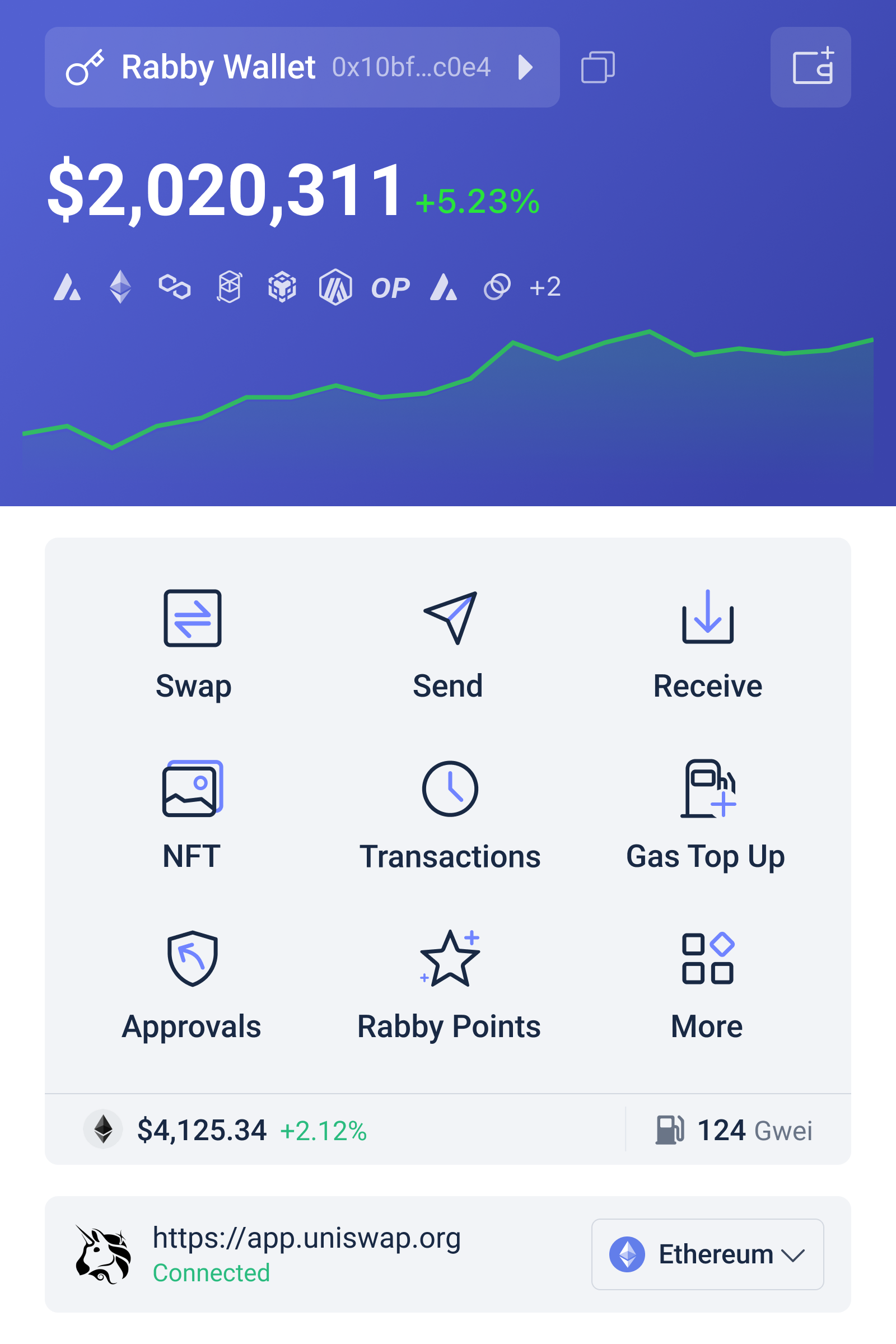
Wallets are the bridge between human intent and on-chain execution. Some act like dumb signing tools; others try to be your risk manager. That’s where wallets with built-in simulation and advanced UI become vital—because they give you the visibility you need without asking you to be a full-time node operator. Okay, check this out—I’ve been using a few, and one that stands out is rabby wallet for its transaction simulation features and clear call traces. It integrates simulation into the signing flow, so you get warnings before you sign and send.
Rabby surfaces internal calls, approvals, and even flags risky patterns (like infinite allowances) that I would otherwise miss. It’s not perfect, and I still double-check critical transactions in a local fork, but for day-to-day DeFi moves it reduces friction and risk markedly. I’m not 100% sure it catches everything, though—nothing catches everything—so treat it as a powerful tool, not an oracle of safety.
Common pitfalls and how simulation helps
Users often overlook meta-tx behavior, permit flows, and chained swaps that route through low-liquidity pools. Those are fertile hunting grounds for slippage and MEV. Simulation will show you the actual pools hit and the final amounts, and that alone can change whether you proceed. My experience: spot the tiny bridges of liquidity and you avoid a bad trade.
Also, approvals. Infinite approvals are convenience turned vulnerability. Use simulation to spot what exactly a contract is asking to move and why. If a protocol tries to transfer tokens you never expected, you catch it before it’s signed. That right there saves you from messy approvals and rare attacks.
FAQ
Q: Can simulation stop MEV front-running?
A: No. Simulation can’t prevent private relays from reordering transactions, but it can reveal whether your transaction will succeed under current conditions and show how much slippage your route actually produces. Combine simulation with bundling services or private relays if you’re worried about MEV-sensitive trades.
Q: Is simulation only for power users?
A: Not anymore. Tools and wallets now bake simulation into normal signing flows. If you use a wallet that shows call traces and warnings, you’re already benefiting. That said, for large or complex operations, pairing wallet-level simulation with a local fork test is still the safest approach.
I’ll wrap this up in a human way—no neat formula, just practice. Do the cheap sanity checks. Simulate. Read the call trace. Don’t approve infinite allowances without thought. My instinct says that DeFi will keep getting more composable and thus risk will keep shifting; simulation is a habit that keeps you ahead. Things will break sometimes. That’s part of the game. But with simulation you’re choosing fewer surprises and more control… and that, honestly, feels like a win.